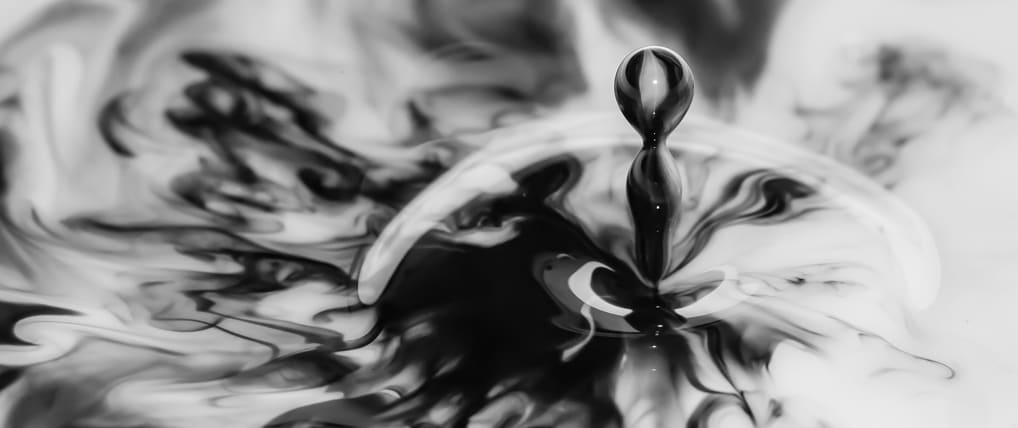
Did you know that there is a science behind the mysterious style of art that is Fluid Painting? Some of my earliest fluid paintings were my favourites, but I was frustrated that I could never replicate them because most of the time they were just happy accidents! Then I stumbled an article that explained the secrets behind this magical form of art.
Although Paint Pouring and Fluid Painting has exploded in popularity quite recently, the technique itself has been around since the 1930’s. A Mexican artist (and political activist) by the name of David Alfaro Siqueiros stumbled across this technique in his studio which he described as “accidental painting”.
Siqueiros immediately fell in love with the aesthetics, a happy marriage between science and art, complexity and beauty, achieved with very little effort. His fascination with this phenomenon led him to the science of Fluid Dynamics. This “accidental painting” technique went on the inform the work of some of the great artists such as Jackson Pollock.
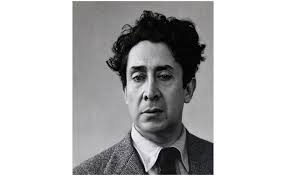
Artist: David Alfaro Siqueiros
(December 29, 2025 - January 6, 2026)
There is a brilliant article from Physics Central that explains the scientific concepts behind Fluid Dynamics.
The article explains:
When a denser fluid rest atop a less dense one, the top fluid wants to move downward, causing the two fluids to mix. Different colors of paint have different densities because of the varying compounds used to make pigments…
…In physics, this battle between densities is called a Rayleigh-Taylor instability, and it crops up in a number of areas outside of art. In astrophysics, for instance, exploding stars expel gases of varying densities, leading to the formation of Rayleigh-Taylor “fingers.”
- Physics Central
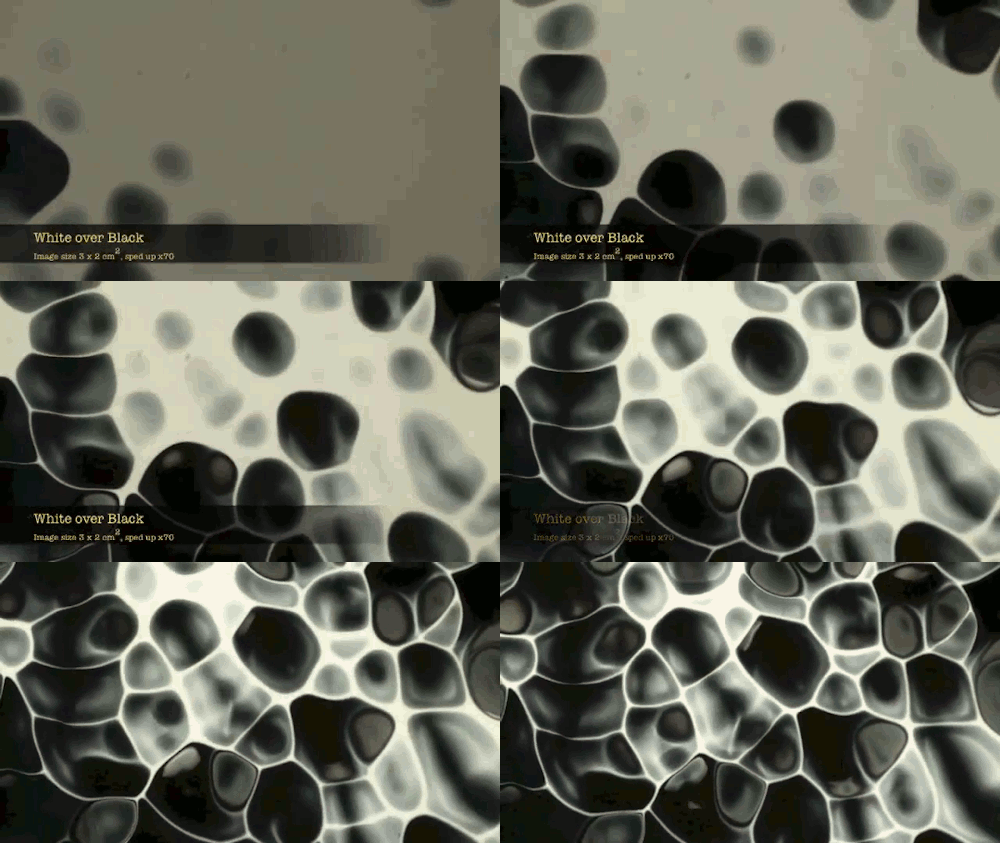
Different pigments are made of different materials and each of these materials has a specific weight and density. Some are heavier such as metals and some are from plant matter such as flowers or resins. When the pigments are all mixed with a similar fluid medium so that the pigments are similarly suspended and allowed to interact, the various pigments push and pull against each-other and some rise to the top and some sink to the bottom. Depending on viscosity and amount, they move around, sometimes mix, but most often, if left to do their thing, they rise and sink creating the appearance of cells or bursted bubbles on the canvas.
- Mad Lab Art
Understanding the secrets and science behind Fluid Painting can give you greater control over your work.
Happy acrylic pouring! 🙂
Further reading:
http://madartlab.com/secrets-paint-pouring-revealed/
http://physicscentral.com/explore/plus/accidental-painting.cfm
https://www.ncbi.nlm.nih.gov/pmc/articles/PMC4420460/
http://fyfluiddynamics.com/post/156446432018/some-paintings-of-mexican-artist-david-alfaro